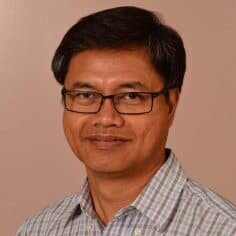
Bernardo Predicala, Ph.D.
Research Scientist
Dr. Predicala manages the Engineering Research Program at PSCI with the following goals: to address environmental sustainability issues associated with swine production and to optimize the physical environment in swine production facilities to enhance performance and reduce production cost. He has secured more than $5.6 million in research grants for more than 50 successfully completed and 7 on-going research projects, which involved innovative and unique engineering and technology applications in various areas such as emissions, environment, housing, transport, ventilation, health, nanotechnology, energy, artificial intelligence, machine vision, among others. During this period, he has supervised (or co-supervised) and coordinated the work of a research team comprised of 16 graduate students at the Masteral and Doctoral level, 8 Post-Doctoral Fellows, 18 Research Assistants/Engineers, 9 Research Technicians, leading to 12 completed thesis, more than 40 publications in refereed journals, and more than 100 technical presentations in scientific and industry conferences, with some student presentations and publications garnering awards. Dr. Predicala also holds concurrent appointment as Adjunct Professor at the Department of Chemical and Biological Engineering at the University of Saskatchewan. He is also actively engaged with professional societies, serving in various capacities including as President of the Canadian Society for Agricultural and Biosystems Engineering in 2013, as well as member of various committees of the American Society of Agricultural and Biological Engineers. He also served as Associate Editor and reviewer for professional journals.
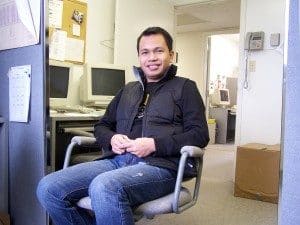
Alvin Alvarado, M.Sc.
Research Assistant
Alvin Alvarado is an Engineering graduate student who will continue the work on investigating the use of nanoparticles for controlling emissions from manure slurry. He started on his M.Sc. program at the Department of Agricultural and Bioresource Engineering this January 2009. He obtained his undergraduate degree in Agricultural Engineering (with honors) from Leyte State University, Philippines in 2005 and was the topnotcher in the Philippine licensure examination for professional agricultural engineers in the same year. Alvin worked as an instructor in the same university where he taught courses in Algebra, Trigonometry, Calculus, and Physics prior to coming to Saskatoon.
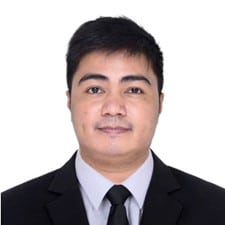
Nolan Matuba, B.Sc.
M.Sc. Student
Nolan graduated from Sorsogon State University in the Philippines and holds a Bachelor’s Degree in Electrical Engineering. He worked for 9 years in the construction industry in the Philippines as a quantity surveyor and cost control estimator in electrical for industrial, mid to high-rise residential, and commercial buildings. He was given an opportunity to study at the University of Saskatchewan as a Master’s student in Biological Engineering and is working under the supervision of Dr. Bernardo Predicala. His research will be focusing on determining the optimum environmental temperature requirements of sows and grower-finisher pigs that will reduce energy costs and environmental carbon footprint while maintaining the overall productivity and performance of the pigs.
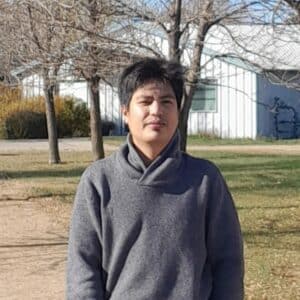
Melvin Hagonob, B.Sc .
M.Sc. Student
Melvin is a professional Agricultural and Biosystems Engineer in the Philippines. He obtained his undergraduate degree at Visayas State University (Main Campus) in 2015. He worked under the Regional Agricultural Engineering Division at the Department of Agriculture from 2016 to 2023. He was also affiliated as a part-time instructor at the Central Philippine University, Philippines teaching agricultural and biosystem-related courses. Currently, he is pursuing his MSc degree program in Biological Engineering at the Department of Chemical and Biological Engineering, University of Saskatchewan. His research focuses on advanced artificial intelligence (AI) technology with machine vision and deep learning techniques for precise detection of real-time health and welfare conditions of pigs in different production stages and onset of farrowing.
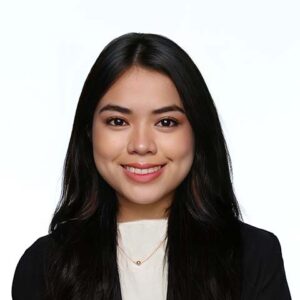
Ela (Krisher) Caragao, B.Sc.
M.Sc. Student
Krisher is a licensed Agricultural and Biosystems Engineer in the Philippines. She obtained her undergraduate degree from the University of the Philippines Los Baños in 2022. From 2022 to 2025, she worked at a cacao experimental farm owned by a private company. She is currently pursuing her M.Sc. degree in Biological Engineering at the Department of Chemical and Biological Engineering, University of Saskatchewan. Her research focuses on integrating electronic sow feeder technology with novel sensors and applying machine learning to improve sow health and performance.
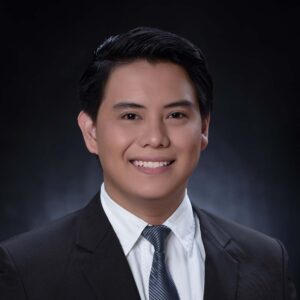
Rico Ubal, B.Sc.
M.Sc. Student
Rico earned his Bachelor of Science degree in Agricultural and Biosystems Engineering from the University of the Philippines Los Baños. Following his undergraduate studies, he served as a Design Engineer for two years, during which he was primarily involved in the development of a self-propelled biomass collector. He is currently pursuing a Master of Science degree in Biological Engineering at the University of Saskatchewan. His graduate research focuses on the application of advanced artificial intelligence and machine vision systems for the non-invasive estimation of pig body weight.
